The vision of this website
एकं सद्विप्रा बहुधा वदन्ति
Also written: ekam sad vipra bahudha vadanti · ekam satya bahudha vipra vadanti · truth is one sages call it by many names · rigveda 1.164.46 · swami charanashrit giri · srisanatan vision · vision of srisanatan · एकं सद्विप्रा बहुधा वदन्ति
इन्द्रं मित्रं वरुणमग्निमाहुरथो दिव्यः स सुपर्णो गरुत्मान्। एकं सद्विप्रा बहुधा वदन्त्यग्निं यमं मातरिश्वानमाहुः॥
indraṃ mitraṃ varuṇam agnim āhur atho divyaḥ sa suparṇo garutmān | ekaṃ sad viprā bahudhā vadanty agniṃ yamaṃ mātariśvānam āhuḥ ||
They call Him Indra, Mitra, Varuṇa, Agni; and He is the heavenly, fair-winged Garutmān. Truth is One — the wise speak of it in many ways; they call it Agni, Yama, Mātariśvan.
— Ṛgveda Saṁhitā 1.164.46
This website is envisioned from that Vedic and Sanātana thought — that the one Truth is spoken of in many ways, and that its knowledge belongs to everyone without exception.
Śrī Śrī 1008 Svāmī Charaṇāśrit Giri Jī Mahārāj
Paramahaṁsa · Śrotriya · Brahmaniṣṭha · Mahāmaṇḍaleśvara
Begin readingOne line of the Ṛgveda contains the whole disposition of Sanātana Dharma toward truth, toward other traditions, and toward the human beings who hold them. This page gives that mantra in full with its source, and then follows the same teaching forward through the Upaniṣads, the Gītā and the Purāṇas — because a claim this large should be shown to run through the entire corpus rather than quoted once.
The original verse, and where it stands
The half-line everyone quotes is the second half of a longer mantra, and the first half is what gives it its force. It names four deities — Indra, Mitra, Varuṇa, Agni — adds the celestial Garutmān, and only then states the conclusion. The seer is not making a tolerant gesture toward other people's gods. He is saying that the ones his own tradition names are already many names of one.
इन्द्रं मित्रं वरुणमग्निमाहुरथो दिव्यः स सुपर्णो गरुत्मान्। एकं सद्विप्रा बहुधा वदन्त्यग्निं यमं मातरिश्वानमाहुः॥ ४६ ॥
indraṃ mitraṃ varuṇam agnim āhur atho divyaḥ sa suparṇo garutmān | ekaṃ sad viprā bahudhā vadanty agniṃ yamaṃ mātariśvānam āhuḥ || 46 ||
They call Him Indra, Mitra, Varuṇa, Agni; and He is the heavenly, fair-winged Garutmān. That which IS, is One — the wise speak of it in many ways; they call it Agni, Yama, Mātariśvan.
| Word | Sense |
|---|---|
| एकम् — ekam | One. Not 'one god' — the neuter form, one reality. |
| सत् — sat | That which IS. Being itself, from the root as, to be. Not a person, not a name. |
| विप्राः — viprāḥ | The wise, the inspired seers — those with the sight to perceive it. |
| बहुधा — bahudhā | In many ways, manifoldly — not 'many things', but many modes of speaking. |
| वदन्ति — vadanti | They speak, they call it. The multiplicity is in the SPEAKING, not in the reality. |
The same teaching in the Upaniṣads
The Śvetāśvatara takes the Ṛgvedic list and extends it — the same reality is the fire, the sun, the wind, the moon, the pure radiance, Brahman, the waters, and Prajāpati.
तदेवाग्निस्तदादित्यस्तद्वायुस्तदु चन्द्रमाः। तदेव शुक्रं तद्ब्रह्म तदापस्तत्प्रजापतिः॥
tad evāgnis tad ādityas tad vāyus tad u candramāḥ | tad eva śukraṁ tad brahma tad āpas tat prajāpatiḥ ||
That alone is Agni; that is Āditya, the sun; that is Vāyu, the wind; and that is Candramā, the moon. That alone is the bright one; that is Brahman; that is the waters; that is Prajāpati.
The Chāndogya then supplies the mechanism, in the most famous teaching device in the Upaniṣads. Uddālaka asks his son to consider a lump of clay: knowing it, everything made of clay is known — because pot, plate and jar are only names taken up in speech. The clay alone is what is real.
वाचारम्भणं विकारो नामधेयं मृत्तिकेत्येव सत्यम्।
vācārambhaṇaṁ vikāro nāmadheyaṁ mṛttikety eva satyam
The modification is a verbal handle, a naming; the clay alone is real.
The same teaching in the Gītā
Kṛṣṇa states the practical consequence, and states it about people rather than about metaphysics: the worship offered to any deity in faith reaches Him, whether or not the worshipper knows it.
येऽप्यन्यदेवताभक्ता यजन्ते श्रद्धयान्विताः। तेऽपि मामेव कौन्तेय यजन्त्यविधिपूर्वकम्॥
ye'py anya-devatā-bhaktā yajante śraddhayānvitāḥ | te'pi mām eva kaunteya yajanty avidhi-pūrvakam ||
Even those devoted to other deities, who worship them filled with faith — they too worship Me alone, O son of Kuntī, though not according to the proper rule.
And two chapters earlier He makes it explicit that He Himself steadies the faith of a worshipper in whatever form that worshipper has chosen — the tradition's clearest statement that sincerity of approach, not correctness of form, is what is being honoured.
यो यो यां यां तनुं भक्तः श्रद्धयार्चितुमिच्छति। तस्य तस्याचलां श्रद्धां तामेव विदधाम्यहम्॥
yo yo yāṁ yāṁ tanuṁ bhaktaḥ śraddhayārcitum icchati | tasya tasyācalāṁ śraddhāṁ tām eva vidadhāmy aham ||
Whatever form any devotee wishes to worship with faith — in that very faith I make him unwavering.
ये यथा मां प्रपद्यन्ते तांस्तथैव भजाम्यहम्।
ye yathā māṁ prapadyante tāṁs tathaiva bhajāmy aham
In whatever way people approach Me, in that same way do I receive them.
The same teaching in the Purāṇas
The Purāṇas repeat it as a caution about distinctions — that the divisions people insist upon are made in names, by minds under illusion, and not in the reality itself.
एक एव परो देवः सर्वव्यापी सनातनः। नामभेदं प्रकुर्वन्ति मायया मोहिता जनाः॥
eka eva paro devaḥ sarva-vyāpī sanātanaḥ | nāma-bhedaṁ prakurvanti māyayā mohitā janāḥ ||
There is one supreme Divine alone, all-pervading and eternal. It is people deluded by māyā who manufacture distinctions of name.
What follows from it for this website
- The knowledge is free, in every language, without an account. Truth that is one cannot be metered.
- Every school is presented on its own terms — six darśanas, six paths of worship, six readings of the Brahma Sūtra, all of them disagreeing, none of them declared the winner.
- The tributary traditions are given as themselves, not as deviations to be corrected.
- Where a text says something indefensible, it is quoted and weighed rather than hidden.
- No page is written to recruit anyone. There is nothing to join.
The one who envisioned it
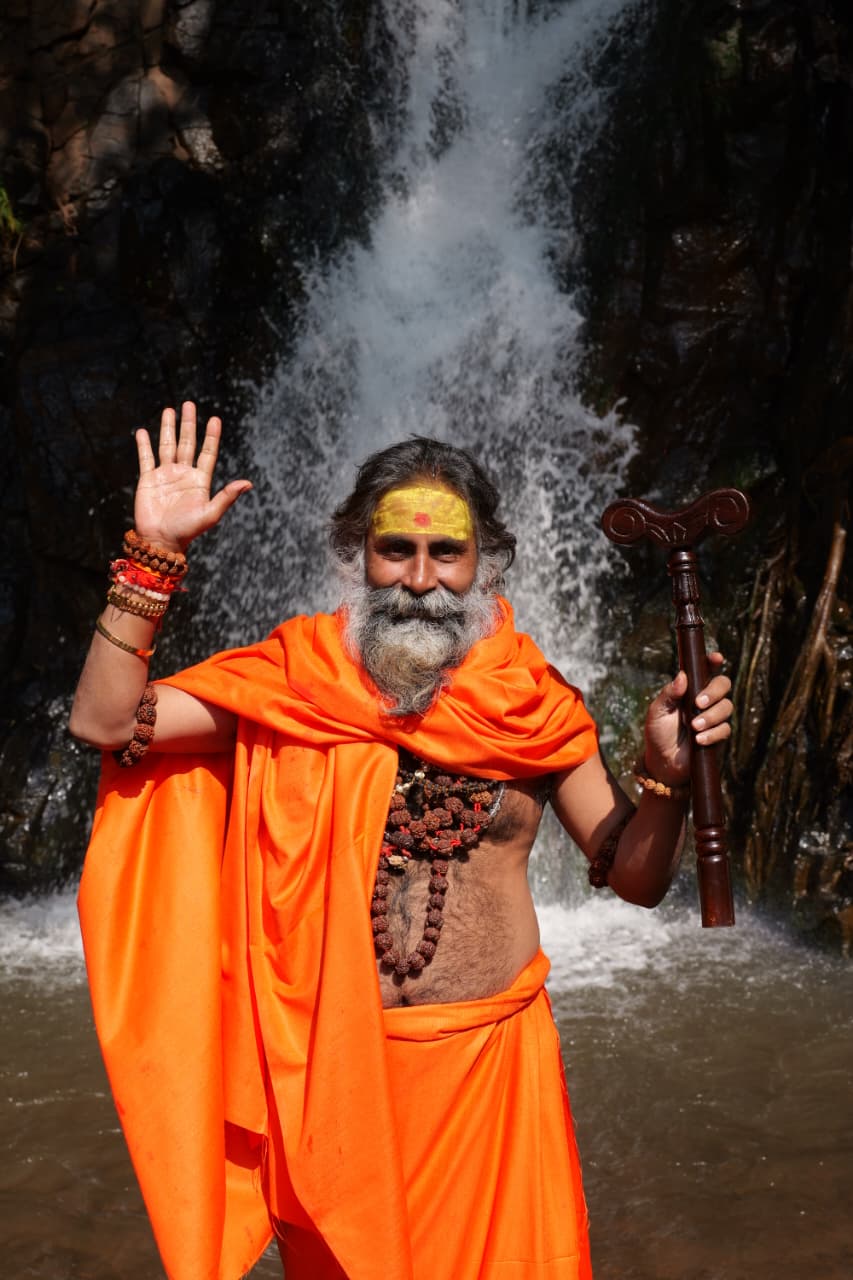
This website is envisioned by Śrī Śrī 1008 Paramahaṁsa Śrotriya Brahmaniṣṭha Mahāmaṇḍaleśvara Svāmī Charaṇāśrit Giri Jī Mahārāj, from that Vedic and Sanātana thought — that Truth is One, that the wise speak of it in many ways, and that what is eternal belongs to every being without distinction of birth, land, language or faith.
| Title | Sanskrit | Meaning |
|---|---|---|
| Śrī Śrī 1008 | श्री श्री १००८ | The traditional honorific prefix for a mahāmaṇḍaleśvara of an akhāḍā. |
| Paramahaṁsa | परमहंस | The highest of the four grades of sannyāsa — one in whom the outward marks of renunciation are themselves set down. |
| Śrotriya | श्रोत्रिय | Learned in the śruti, in an unbroken line of transmission. |
| Brahmaniṣṭha | ब्रह्मनिष्ठ | Established in Brahman — not merely informed about it. |
| Mahāmaṇḍaleśvara | महामण्डलेश्वर | A senior office within the ascetic orders, holding responsibility for a region. |
| Giri | गिरि | One of the ten names of the Daśanāmī order established by Śaṅkarācārya. |
तद्विज्ञानार्थं स गुरुमेवाभिगच्छेत् समित्पाणिः श्रोत्रियं ब्रह्मनिष्ठम्।
tad-vijñānārthaṁ sa gurum evābhigacchet samit-pāṇiḥ śrotriyaṁ brahmaniṣṭham
For the knowledge of That, let him approach — fuel in hand — a teacher who is learned in scripture and established in Brahman.
About this site
What srisanatan.org is for, how it is written, its editorial principles, and how to contribute a correction.…
Questions people actually ask
Direct answers to the most common questions about Sanātana Dharma — its founder, its book, caste, idols, many …
Glossary of Sanskrit terms
The key terms used across this site, with their roots and precise meanings.…
Services
What is offered here, what is free, and what will require an account — study tools, guided programmes and cons…
Contact
How to reach us with a correction, a question, or a request.…
Last revised 2026-08-16. Corrections are welcome — see how this site is written.